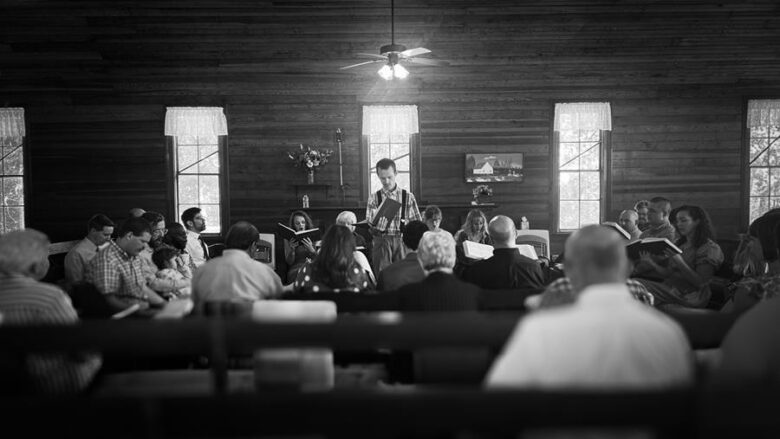
The new revision will be unveiled at Sacred Harp convention in Atlanta, GA in September
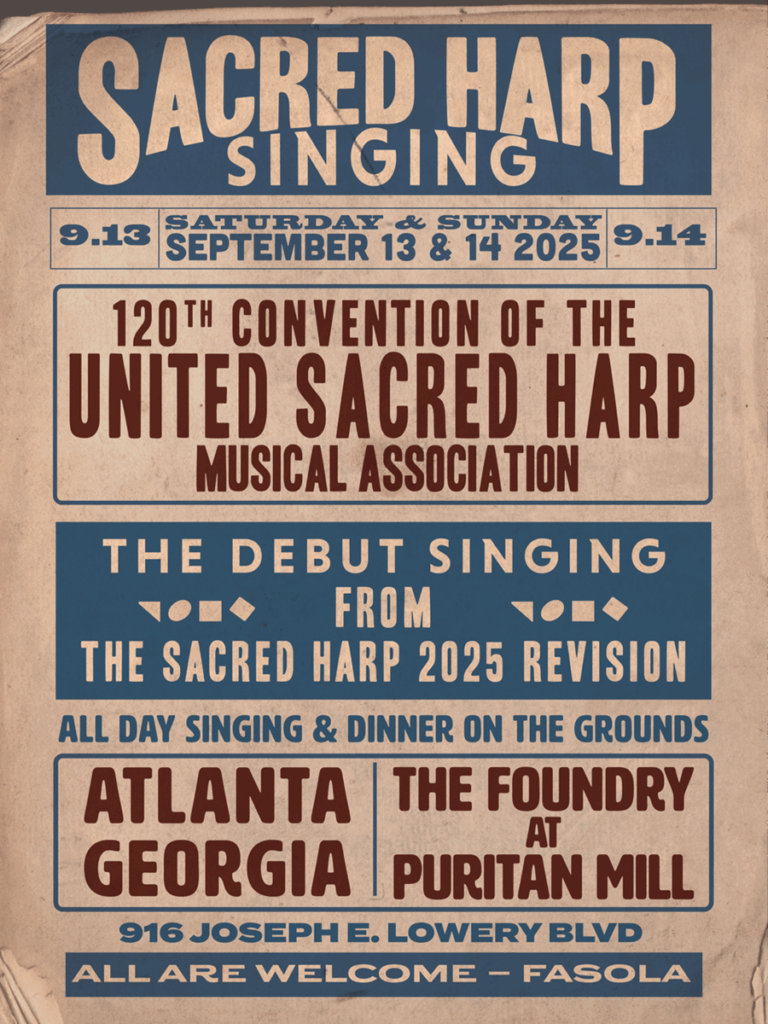
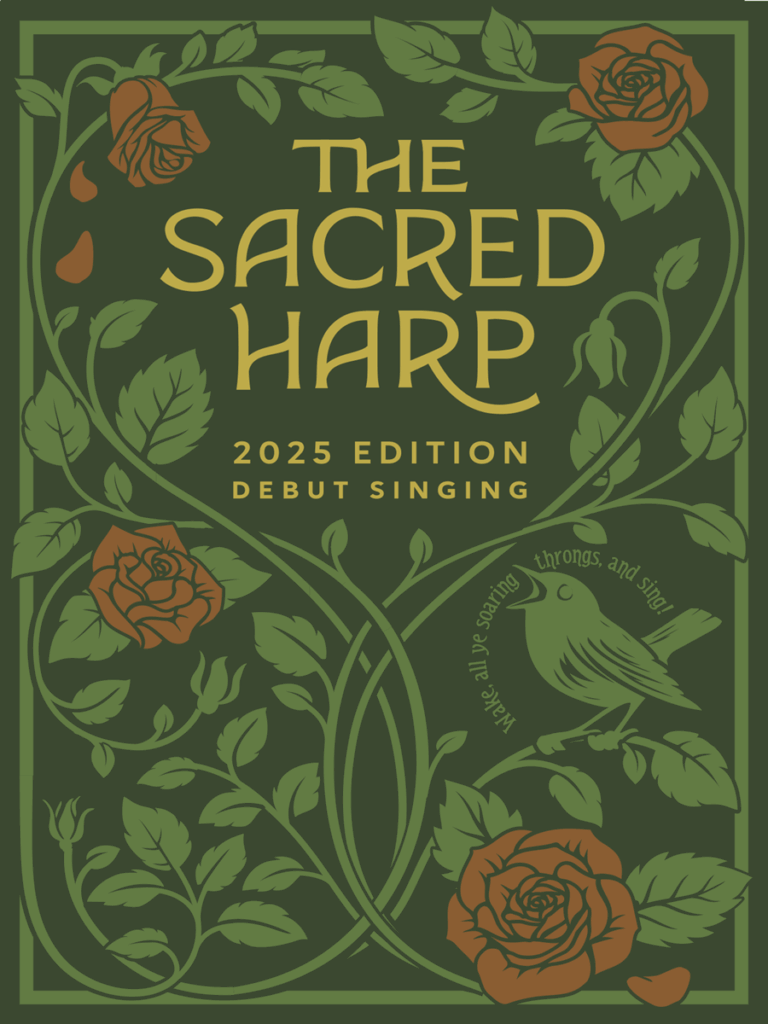
The Sacred Harp, first published in 1844 in Hamilton, GA, has been in continuous use since its original publication and has been the musical life blood of first, 19th century southerners and now, both 21st century rural farmers and young urban hipsters alike. The 2025 edition revises every aspect of the old sacred songbook, while maintaining its timeless appeal and is sure to satisfy the “singing public” and enthrall newcomers to the tradition.
WHAT IS SACRED HARP SINGING?
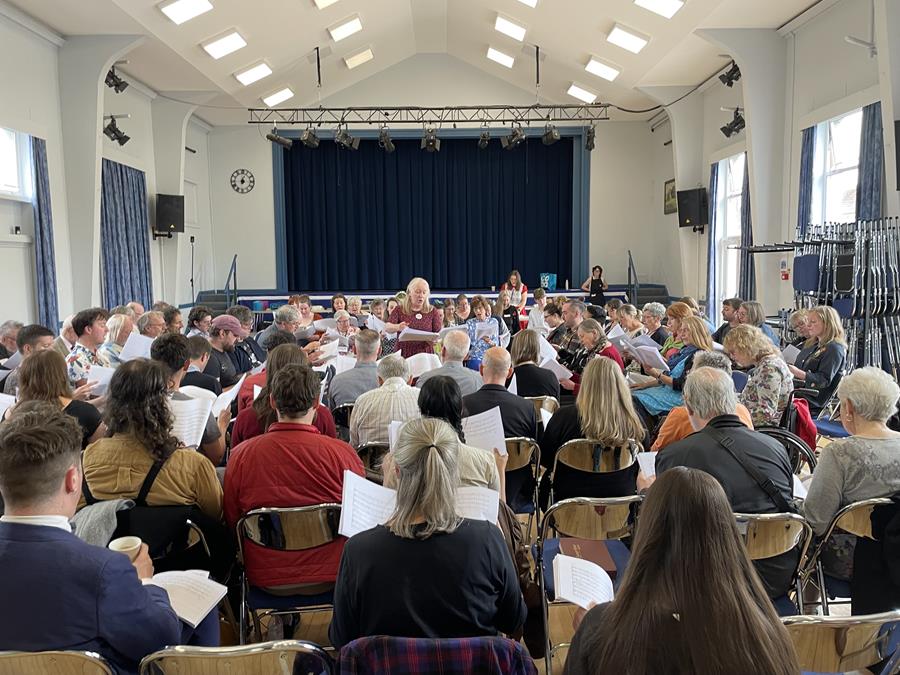
Sacred Harp singing is a form of a cappella shape-note hymn singing that preserves some of the earliest distinctively American music. Sacred Harp has persisted for almost two centuries in the Deep South, particularly in the context of community singing events that emphasize participation over consumption, as it is not generally performed for an audience. The tradition uses shape notes, in which triangle, circle, square, and diamond shape note heads are paired with the syllables fa, sol, la, and mi to represent the notes in the scale. Sacred Harp is one of the open secrets of American music. If you have heard it at all, it may have been from the haunting choral music in the motion picture, “Cold Mountain,” or in a sample from such artists as Bruce Springsteen or M.I.A.. The past four decades particularly have seen remarkable growth of the tradition throughout other parts of America as well as another dozen countries.
WATCH: SACRED HARP VIDEO FROM 1982 FROM THE LOMAX FILM COLLECTION
The debut singing from the 2025 edition of The Sacred Harp songbook will be held in Atlanta this year on “the second Sunday in September and Saturday before,” and is expected to be the largest singing in generations, drawing hundreds of singers from across the United States and beyond. The new book will be unveiled at other singings in New York City, the UK, Minnesota, Vermont and beyond in the following months.
WATCH: SACRED HARP SINGING FROM ALABAMA, 2013: “CORINTH”
WATCH: VIDEO FROM IRISH SACRED HARP CONVENTION, 2012
To request interviews with members of the revision-music committee (all Sacred Harp singers) who oversaw the publication of the new book or with composers whose songs have been selected for inclusion in the new edition, please contact Daniel Gill: daniel@forcefieldpr.com
Upcoming Singings from The Sacred Harp (2025 Edition):
North American Debut: The 120th convention of the United Sacred Harp Musical Association, Atlanta, GA, Sept 13 & 14 2025, 9:30 a.m. – 3:00 p.m. both days (The Foundry at Puritan Mills)
European Debut: The 28th United Kingdom Sacred Harp Convention, County Durham, UK, September 20 & 21, 2025 10 a.m. both days (Barley Mow Village Hall)
Advance pdf links are also available to consider coverage by request to: daniel@forcefieldpr.com
WATCH: THE SACRED HARP SINGING TRADITION LIVES ON
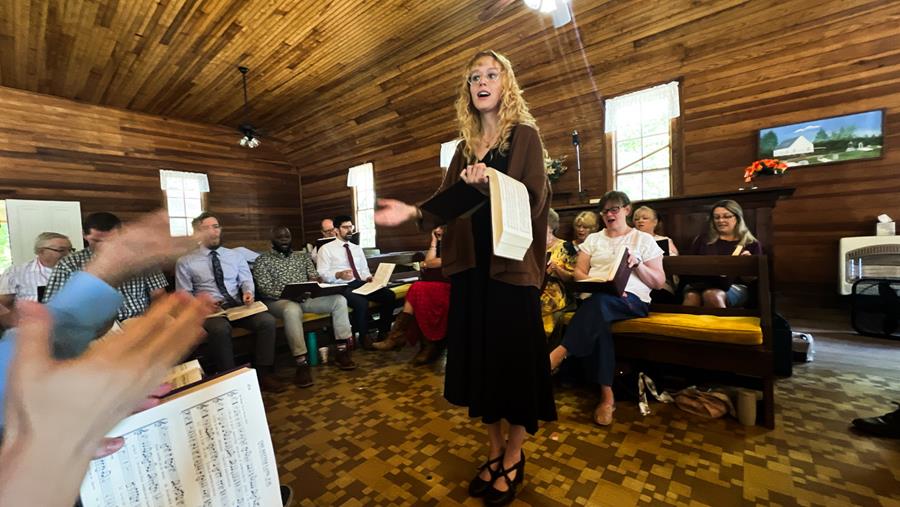
Sacred Harp singing is a distinctive form of early American, a cappella shape-note hymn singing from a songbook called The Sacred Harp, first published in 1844. The term “Sacred Harp” also is associated with a host of interrelated traditions associated with communal participatory events called “singings” that have existed alongside the book since it was originally published. Sacred Harp singing is often described as “haunting” and “spare” and “powerful,” but words tend to fail compared to listening to Sacred Harp singing. Recordings are no match for being in the room where it is sung by a powerful group of singers. Even then, one must really stand in the middle of the “hollow square” around which the four voice parts arrange themselves (and in which a different singer leads each song) to truly grasp the magnitude of sound that can be produced by human beings. Also, it’s “harp,” not “heart” and it does not involve harps, nor any other instrument at all other than the “sacred harp”—the human voice.
The Sacred Harp stands out from the many similar oblong shape-note music books that were produced in the 19th century because of the way in which it has been revised every generation. From the beginning, this process was undertaken by a committee of singers rather than an individual, binding the songbook more closely to its ecumenical community of singers. And from its earliest years, the compilers included new songs written by living composers, a tradition that has continued up through each revision of the book. The 2025 revision’s nine members include singers from Georgia and Alabama to the U.K. and the Pacific Northwest. In it, 49 living composers contributed over two thirds of the 113 songs being added to the book, the largest and most geographically widespread group of living composers in the history of the songbook.
Like other books of the 1800s, The Sacred Harp uses “shape notes,” a system dating to 1800, in which the musical noteheads have different shapes corresponding with the syllables fa, sol, la, and mi, to make it easier to sing. Singers sing each song “on the notes” first, using the shape-note syllables before singing the words. To the casual observer, the singing of the notes may sound more like a foreign language than anything else. It is one of the few forms of music that decidedly does not exist for consumption, but rather, for participation. One must only listen to a few Sacred Harp songs to discover that this is the case. It is certainly a striking sound, but it usually does not feature a main melody with three supporting harmonies, but rather is written in “dispersed harmony” where all parts are composed to be interesting to sing, not just the melody. The result is a spare, striking, and powerful effect, but also one in which the melody is buried within the sound. Listeners are always welcome, but will be surprised if they come expecting a performance. It is truly singers’ music and a Sacred Harp singing will go pretty much the same way whether there are any other people listening in or not. The one thing you can be sure of is if you attend a singing, there will be someone there who will hand you a book and encourage you to join in. That is where the pleasure comes from.
Sacred Harp singing ultimately comes from a reforming tradition in the early American churches, with the goal being to improve congregational participation in churches, so it is unsurprising that the tradition is deeply spiritual—after all, the hymnal features four part settings of Christian hymns. But, because it has also been a deeply welcoming tradition, it has found practitioners across a broad spectrum of backgrounds and faith commitments. Historically, the roots of Sacred Harp have been primarily in Georgia and Alabama as well as parts of Texas, Mississippi, Tennessee, and Florida, but for the past four decades, Sacred Harp singing has spread throughout the rest of the United States as well as about a dozen other countries such as Germany, Poland, England, and Ireland.
Salient facts about The Sacred Harp: 2025 Edition
–While there have been several revisions of the book since 1844, the 2025 edition is only the second time The Sacred Harp has been revised from cover to cover with songs added and removed.
–The 2025 edition of The Sacred Harp has been 7 years in the making, with the revision process beginning in 2018.
–Nearly 1200 songs were submitted for inclusion in the new edition by hundreds of members of the singing community of which only 10% were added to the book.
–Submitted songs were sung at 13 test sessions open to the community.
–New songs added were written in traditional styles associated with the historical editions of The Sacred Harp.
–The book was produced by a team of 50 singers with expertise ranging from design to music engraving to the Bible to instructional writing to eighteenth-century poetry.
–This process represents an unprecedented level of community involvement in the making of the new songbook.
–Not just the music: the committee considered 350+ pages of input from the community, scrutinized punctuation of 600+ hymn texts, etc.
–The committee even commissioned a new typeface design from a leading music font designer to achieve a perfect balance between tradition, readability, and elegance in the songbook’s appearance.
–Supervised by a nine-member revision-music committee whose members have a combined 350+ years of experience singing Sacred Harp music
–The debut singing of the 2025 edition of The Sacred Harp at the 120th convention of the United Sacred Harp Musical Association in Atlanta on Sept 13-14, 2025 is expected to be the largest singing in a generation, drawing hundreds of singers from across US and beyond.
–There will also be a symposium on Friday Sept 12, 2025, which is focused on the details around the publication of the new revision of The Sacred Harp, including panel discussions about font choice, song choices, musical composition (by composers whose songs were selected for inclusion), and other relevant subjects.
Other noteworthy singings from the 2025 Revision of the Sacred Harp:
New York City All-Day Singing, Brooklyn, NY September 20, 2025 10am (Brooklyn Friends Meeting House)
Minnesota State Convention, St Paul MN, September 27-28, 2025 9:30am (Olivet Church, Sat / The Landing, Sun)
New England Sacred Harp Convention, Burlington, VT October 4-5, 2025 9:30am (Burlington City Hall)
Munich Sacred Harp All-Day Singing, Munich, Germany October 4, 2025 10:30am (Spirituelles Zentrum St. Martin)
Alabama State Sacred Harp Musical Convention Southside, AL November 22-23, 2025 9:30am (Southside Community Center)
Learn more about Sacred Harp singing:
originalsacredharp.com
fasola.org
Look for the 2025 Revision of Awake, My Soul: The Story of the Sacred Harp, the 2007 documentary about Sacred Harp singing by Sacred Harp singers, Matt & Erica Hinton, to be re-released in a newly edited, remixed and remastered form, in the coming weeks. Listen to the soundtrack to the film HERE